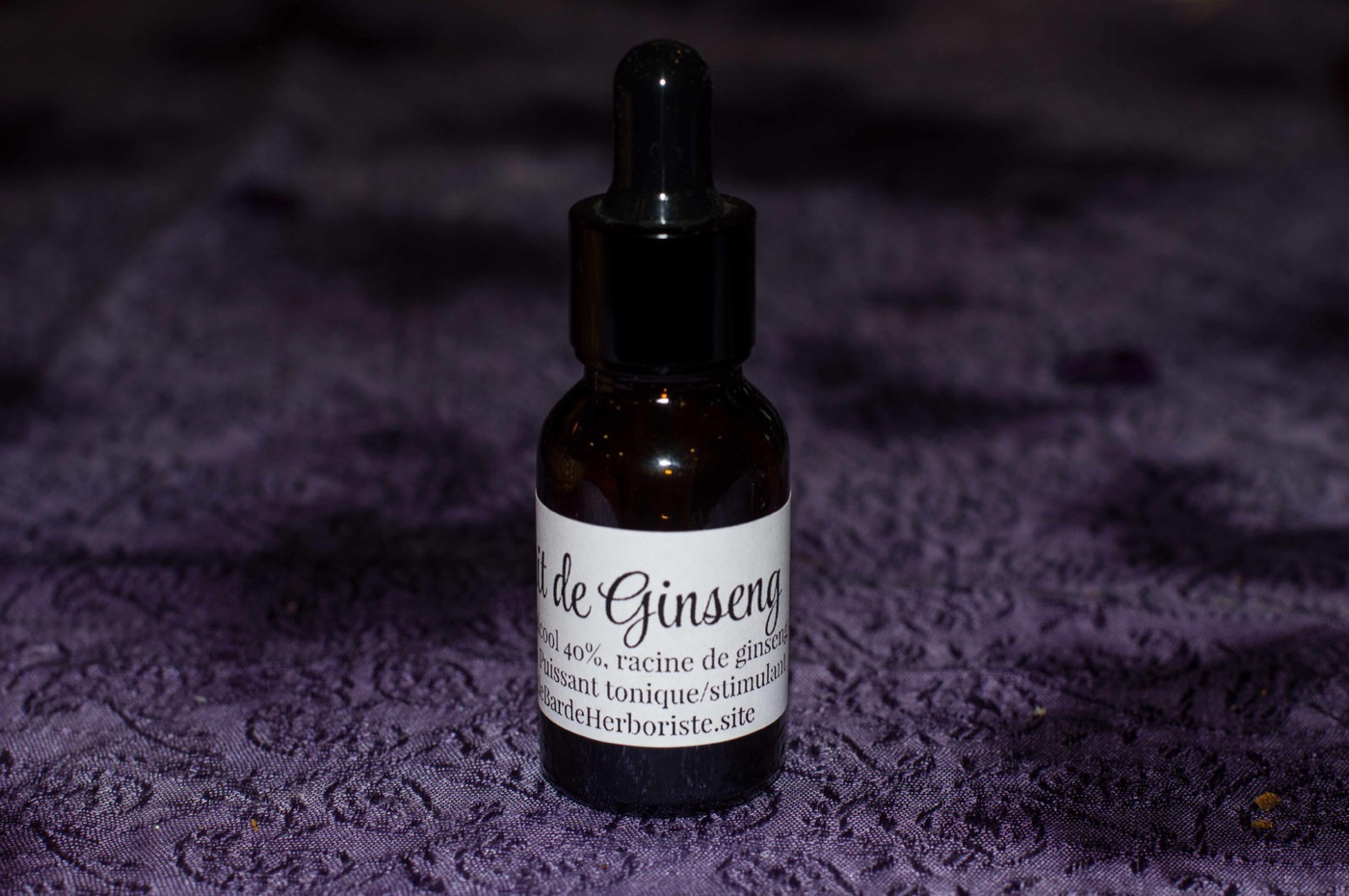
American ginseng
Panax quinquefolius
The root that made a fortune for the Jesuits of New France and emptied our forests; today shade-grown in Ontario by hand.
Few plants have a Québec story this wild. In 1716, the Jesuit Joseph-François Lafitau, posted near Montréal, searched the woods for a plant a colleague had described from China. A Mohawk woman showed it to him: American ginseng, cousin of the Asian kind. Within a few years New France was shipping tonnes of roots to Canton at gold-rush prices. Then the rush ran away with itself, roots were dug too young, dried badly, the reputation collapsed and the forests were emptied. Wild ginseng is protected in Québec today, and Étienne never picks it.
Portrait
It is a small shade plant, barely a foot tall, with fan-shaped leaves of five leaflets and a cluster of red berries in summer. Its fleshy root, often forked like a tiny human body, takes years to fill out, and you can read its age in the rings on its neck.
Origin
The shop's ginseng comes from Ontario farms, the world's leading producing region, where it grows for four years under long black shade cloths that mimic forest light. The roots are dug in autumn, washed and dried slowly.
In the workshop
Étienne offers it as whole root and slices. The taste is one of a kind: bitter first, then surprisingly sweet, earthy, with a long finish of carrot and licorice. Chewed, simmered as a decoction or steeped in honey.
Our products are artisanal plant-based preparations. They are not intended to diagnose, treat, cure or prevent any disease.