Cordyceps
Cordyceps militaris
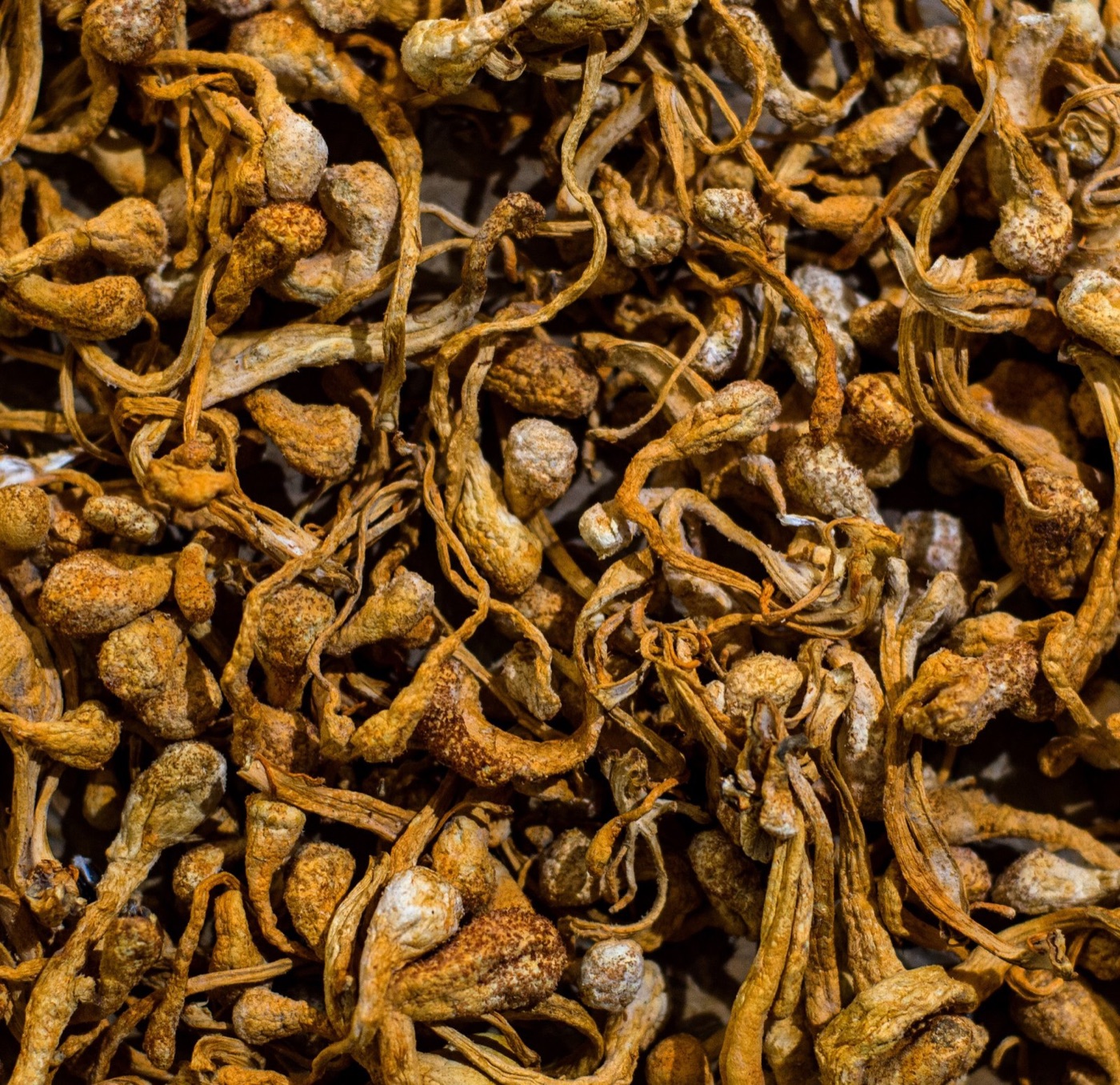
Small bright-orange clubs grown on rice rather than on insects: a strange mushroom the colour of dusk.
Portrait
Cordyceps is the strangest mushroom on our shelves. In the wild, Cordyceps militaris grows on caterpillars and pupae buried in the soil, and its little orange clubs push up through forest moss in autumn. Its Tibetan cousin, Ophiocordyceps sinensis, which sprouts from the heads of high-altitude caterpillars, sells for its weight in gold and has spawned an entire Himalayan trade, with collectors crawling across meadows at four thousand metres.
A clean culture
The shop's cordyceps has never seen a caterpillar. It is grown in sterile rooms on a brown-rice substrate, in jars where it comes up in tufts of orange sticks. This method, developed in Asia and adopted by North American growers, gives a consistent mushroom with no wild harvest and no pressure on alpine ecosystems.
Sensory notes
Dried, cordyceps is light and brittle, a saffron orange that tints water the moment it is steeped. Its taste is mild, slightly umami, with a note reminiscent of dried shrimp or mushroom stock.
In the workshop
Étienne offers it whole or powdered. As a decoction it turns the liquid golden yellow and pairs well with ginger and lemon. In the kitchen, a few sticks rehydrated in a broth or a pot of rice bring colour and a discreet marine savour.
Our products are artisanal plant-based preparations. They are not intended to diagnose, treat, cure or prevent any disease.