Reishi
Ganoderma lucidum
The lacquered mushroom of Chinese prints, its cap gleaming red like varnish, grown without inputs a few hours from Montréal.
Reishi looks manufactured. Its fan-shaped cap, a deep mahogany red, gleams as if varnished, with a white or yellow margin while it is still growing. Underneath there are no gills, only a surface of fine cream pores that bruise brown when touched. It grows on stumps and dying hardwoods, and its flesh is as hard as wood: no chance of cooking it like a table mushroom.
Two thousand years of pictures
In China, lingzhi appears in texts since the Han dynasty, and above all in art: carved in jade, embroidered on imperial robes, painted beside cranes and pines. The stylized clouds of Chinese ornament actually take the shape of its cap. In Japan it is called reishi, and that is the name that travelled the world.
Origin
The shop's reishi comes from an organic grower in Ontario who raises it on hardwood logs, the old way, without inputs. Étienne prefers this log-grown reishi, slower and denser, to industrial sawdust versions. It arrives whole, sliced or already ground.
In the workshop
Reishi is not eaten; it is simmered. An hour-long decoction gives a brown broth with a frank, woody bitterness, softened with a little honey or blended with chaga and cinnamon. It also goes into the shop's tinctures, where the alcohol draws out a deep red colour.
Our products are artisanal plant-based preparations. They are not intended to diagnose, treat, cure or prevent any disease.
In the shop
 Favourite
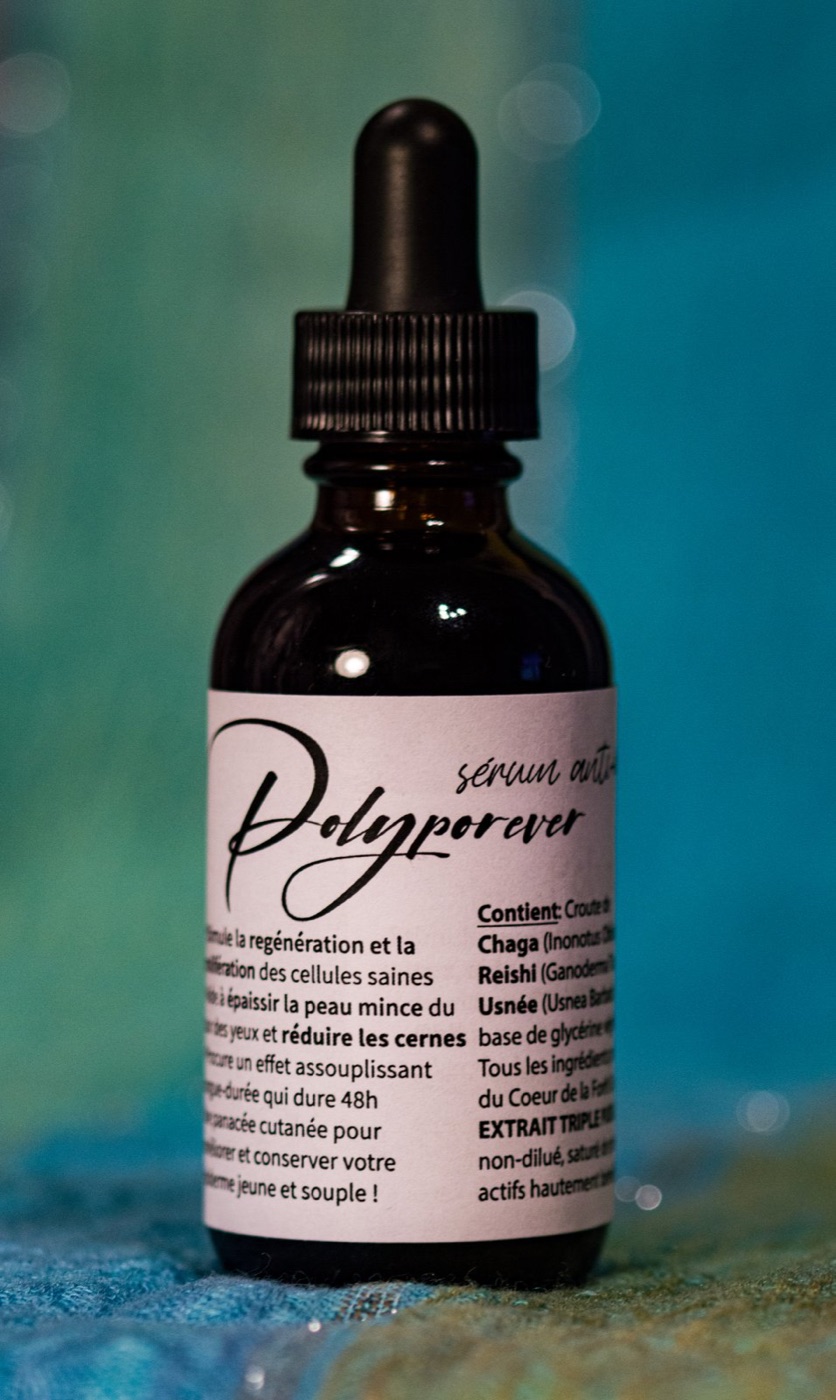
PolyporEver — Chaga Serum
Chaga, reishi and usnea concentrate in organic vegetable glycerin.
 Favourite
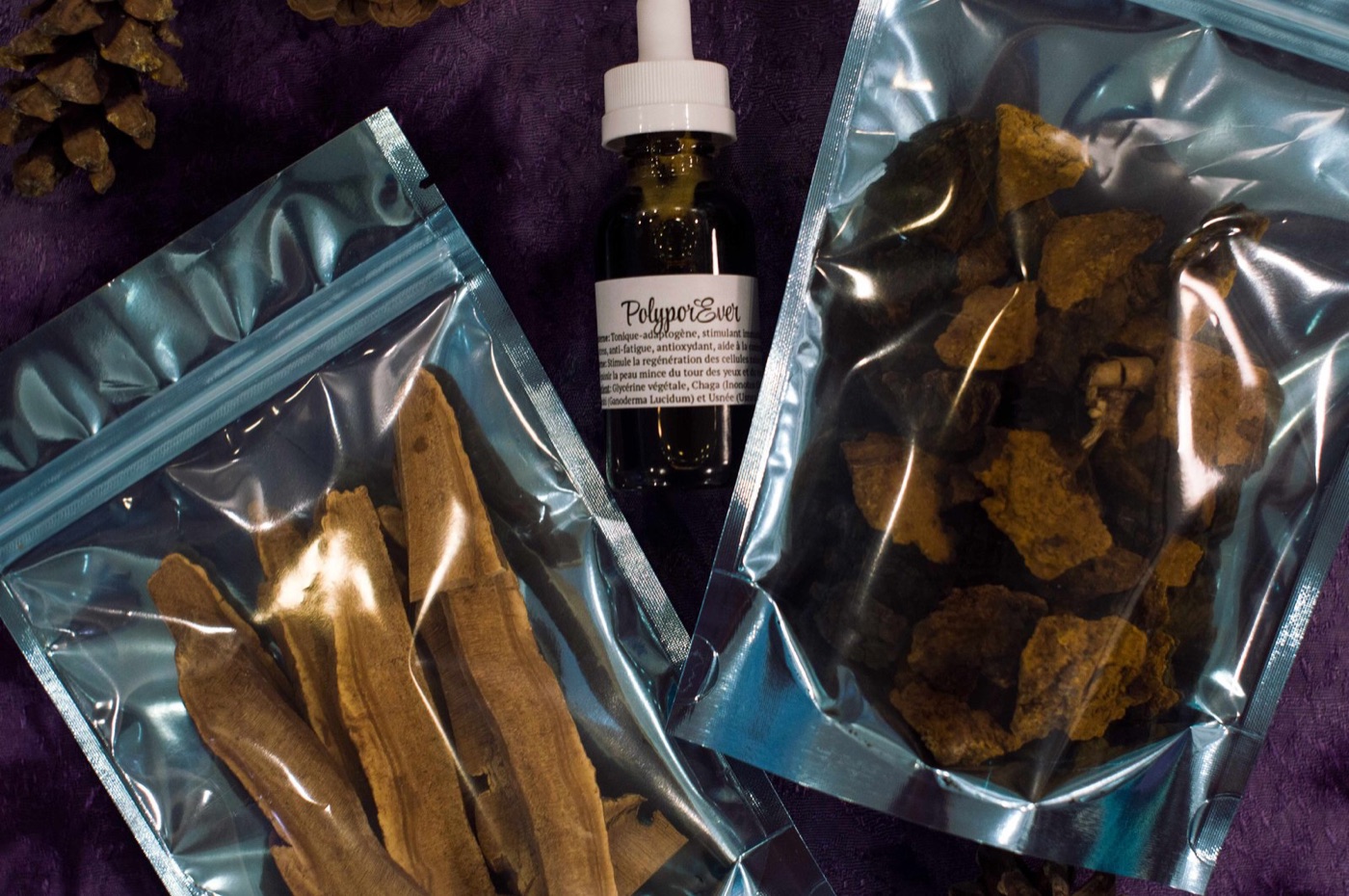
"Boreal Forest" Kit
Chaga, reishi, astragalus and PolyporEver extract — the plants in their raw state.
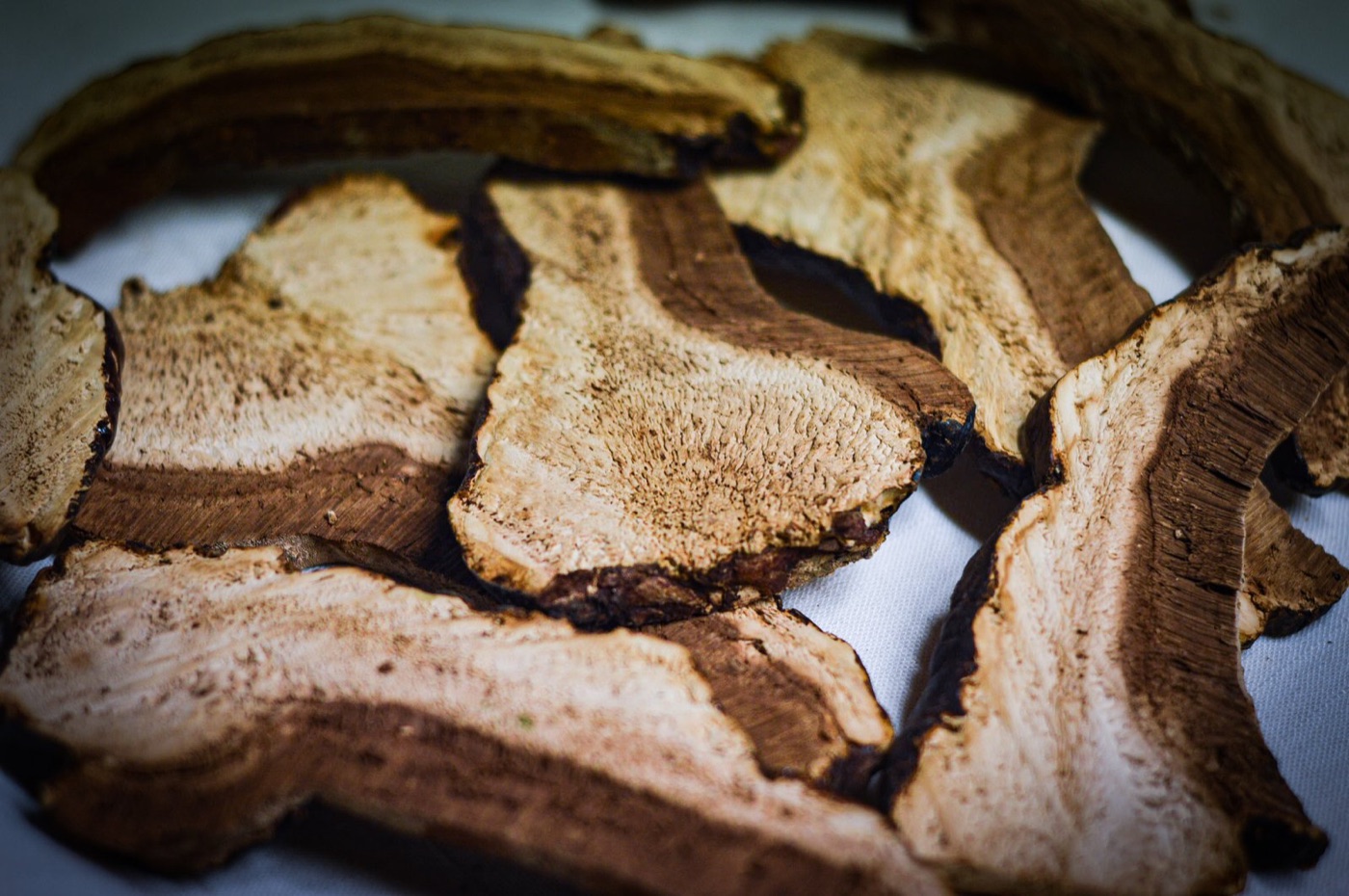
Dried Reishi
Organic Ontario reishi, sliced and dried.