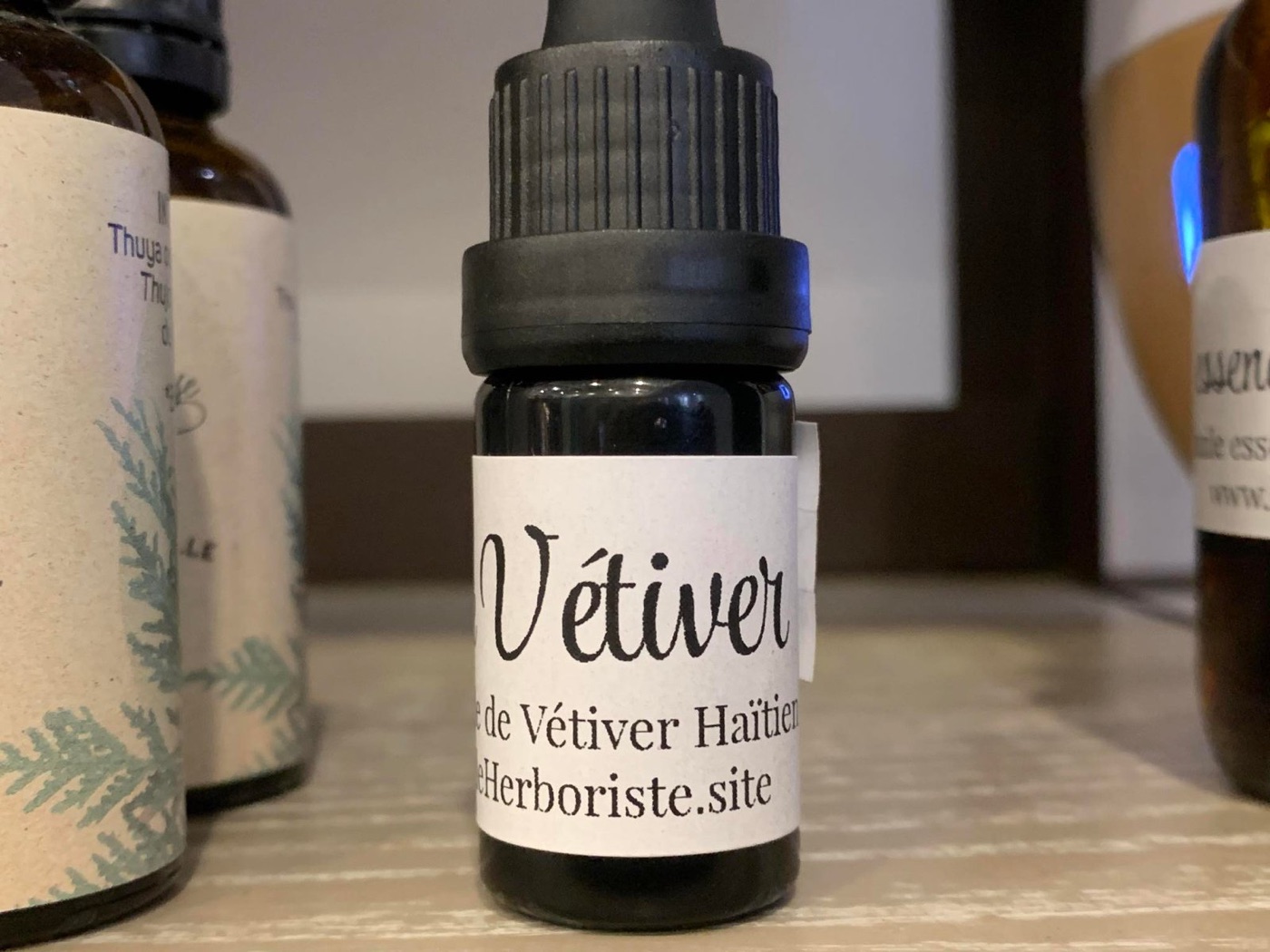
Vetiver
Chrysopogon zizanioides
A grass whose roots dive three metres deep and smell of wet earth, smoked wood and grapefruit: perfumery's secret foundation.
Portrait
From above, vetiver is nothing special: a tall clumping grass like a sturdy lemongrass, reaching two metres. Everything happens underground. Its roots go straight down in a dense curtain, as deep as three metres, and that is where the scent hides. In India the roots are woven into mats and window screens that are sprinkled with water in summer to cool the house; there it is called khus.
Haiti, vetiver capital
More than half the world's vetiver comes from southern Haiti, around Les Cayes, where thousands of smallholders plant it on the hillsides. The roots are pulled by hand after twelve to eighteen months, washed, sun-dried, then steam-distilled in large stills. The oil that comes out is thick and amber, and improves with age like wine.
In the bottle
Nearly every great men's fragrance contains it, often without saying so. Vetiver is a base note, the one still on the skin hours after everything else has lifted. It smells of earth after a storm, raw root, smoked wood, with a hint of grapefruit and hazelnut.
In the workshop
Étienne works Haitian vetiver in two forms: the dried roots, braided or loose, to tuck into drawers and wardrobes for their scent, and the essential oil, which he doses sparingly into the shop's perfumed oils to give them depth.
Our products are artisanal plant-based preparations. They are not intended to diagnose, treat, cure or prevent any disease.