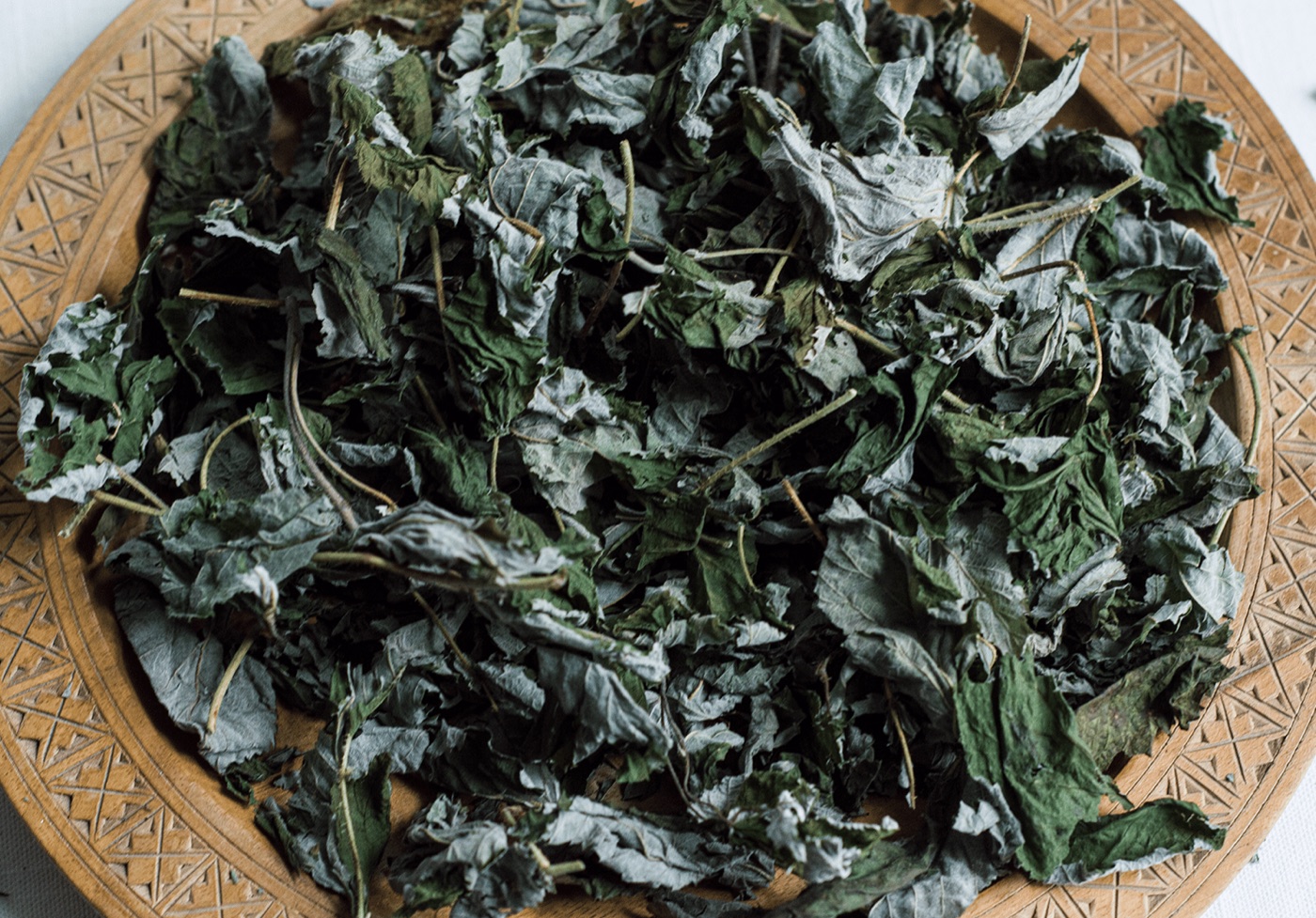
Raspberry leaf
Rubus idaeus
Long before the fruit, it is the silvery-backed leaves of wild raspberry that get picked for a tea tasting like a light black tea.
Wild raspberry is everywhere in the Laurentians: along logging roads, in recent cuts, on the old stone piles of abandoned farms. Its arching canes, covered in fine prickles, carry compound leaves of three or five toothed leaflets, green above and silvery white below. That pale underside lets you name it at a glance, even without a berry in sight.
A plant of the edges
Raspberry loves light and disturbed ground. It is among the first to move in after a fire or a clear-cut, and it feeds everything that passes: bears, birds, pickers. The Romans already cultivated it, and its Latin name, idaeus, points to Mount Ida in Crete, where the Greeks claimed it originated. In Québec, raspberry leaf tea has been part of the grandmothers' repertoire for generations.
Harvest
Étienne picks the leaves in early summer, before the fruit sets, when they are full and unblemished. He takes leaves from the middle of the canes, leaving the tips to keep growing, and dries them flat so they don't crumble. The raspberries themselves are left for the bears.
In the workshop
Dried, raspberry leaf gives a coppery infusion with a mild, slightly tannic taste that recalls a caffeine-free black tea. It forms the base of several of the shop's tea blends, often alongside nettle, rose or hibiscus.
Our products are artisanal plant-based preparations. They are not intended to diagnose, treat, cure or prevent any disease.