Red pine
Pinus resinosa
Red pine, with its brick-coloured scaly bark, yields a bright, clean resin that Étienne collects on his walks.
Red pine is a true local. You know it by the reddish plates of bark stacked like roof tiles, and by its long paired needles, at once supple and brittle: bend one and it snaps clean. That is an old woodsman's trick for telling it apart from Scots pine. The cones are small, rounded and without prickles.
It grows in tight stands on poor, sandy ground, and many of the arrow-straight plantations you pass north of Montréal are red pines sown in the 1950s. Over the decades the rows have opened up, moss has crept back in, and they have become beautiful places to walk.
Harvest
The resin is clearer than Scots pine's, almost glassy, and it runs mostly where the bark has been pruned or scraped. Étienne lifts it off with a wooden knife, one tear at a time, always leaving the protective layer over the wound. After storms he also gathers fallen needles while they are still green and dries them in bundles.
In the workshop
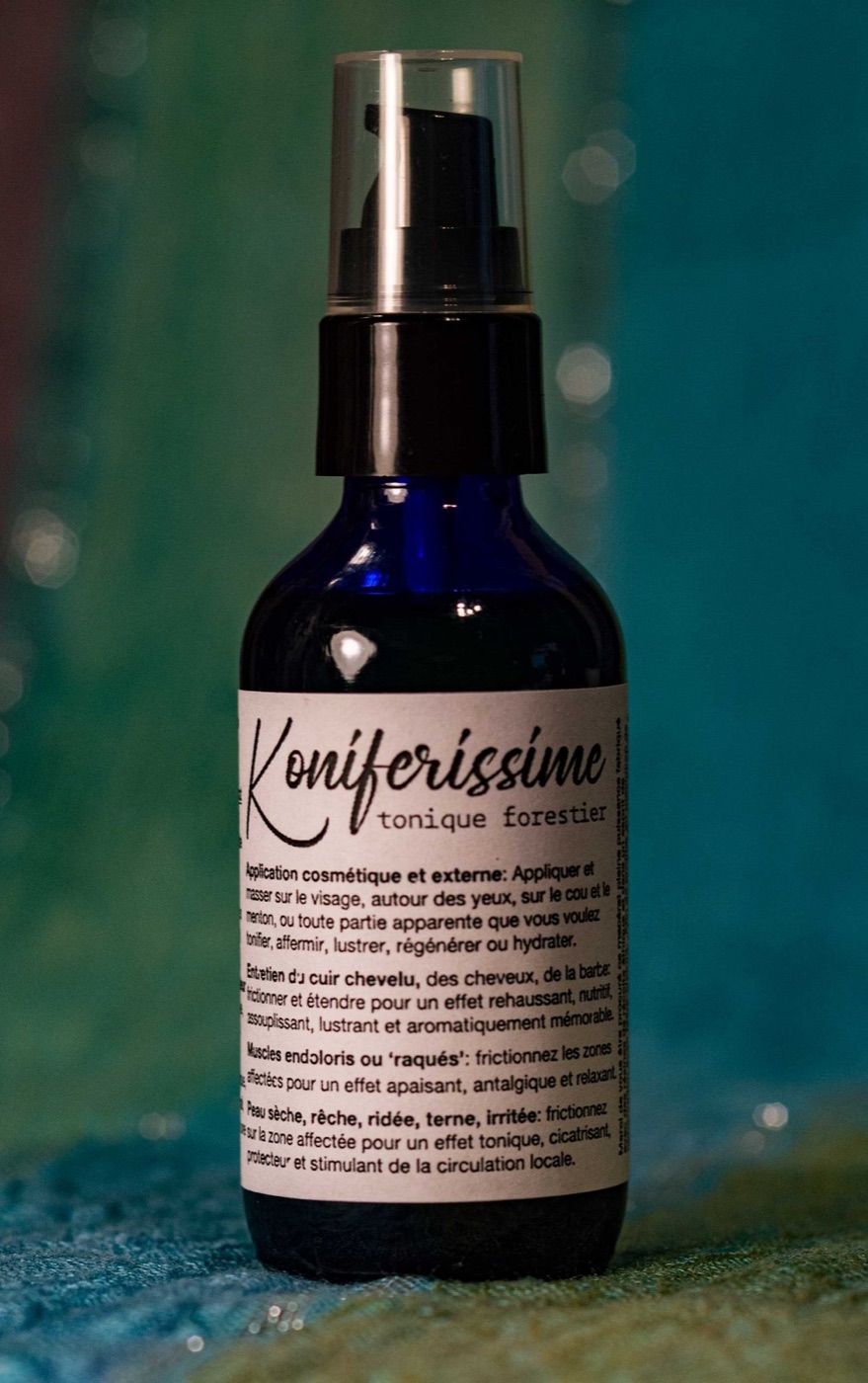
Warmed gently in oil over a water bath, the resin gives a perfumed base with a clean, fresh, slightly lemony character. The dried needles go into loose incense blends and scent the steam baths. It is the smell of summer camp, crackling firewood and a lake at dawn.
Our products are artisanal plant-based preparations. They are not intended to diagnose, treat, cure or prevent any disease.