Spruce
Picea glauca / Picea pungens
Spruce gum, chewed by our grandparents and once sold in general stores, is a hard resin with the scent of the boreal forest.
There is something deeply Québécois about spruce. It is the tree of the boreal forest, the one that lines the northern lakes and stands in peat bogs where nothing else will grow. White spruce has short, stiff, prickly needles set all the way around the twig; blue spruce, planted in our cities, carries that silvery sheen that makes it unmistakable. Rub a needle between your fingers and it smells a little of cat, a little of resin, which is how you tell it from the sweeter balsam fir.
Spruce gum
Long before gum came in packets, people chewed spruce gum. Lumberjacks carried lumps of it in their pockets; general stores sold it in little cubes wrapped in wax paper. It was in fact the first commercial chewing gum in North America, made in Maine in the 1840s. It is hard on the teeth at first, then softens and gives up a bitter, woody taste.
Harvest
Étienne gathers it by hand from trunks where the bark has been injured and the resin has had time to harden into pinkish crusts. He never takes fresh resin, the kind still protecting a wound. The best time is deep cold: the gum then breaks off in clean shards.
In the workshop
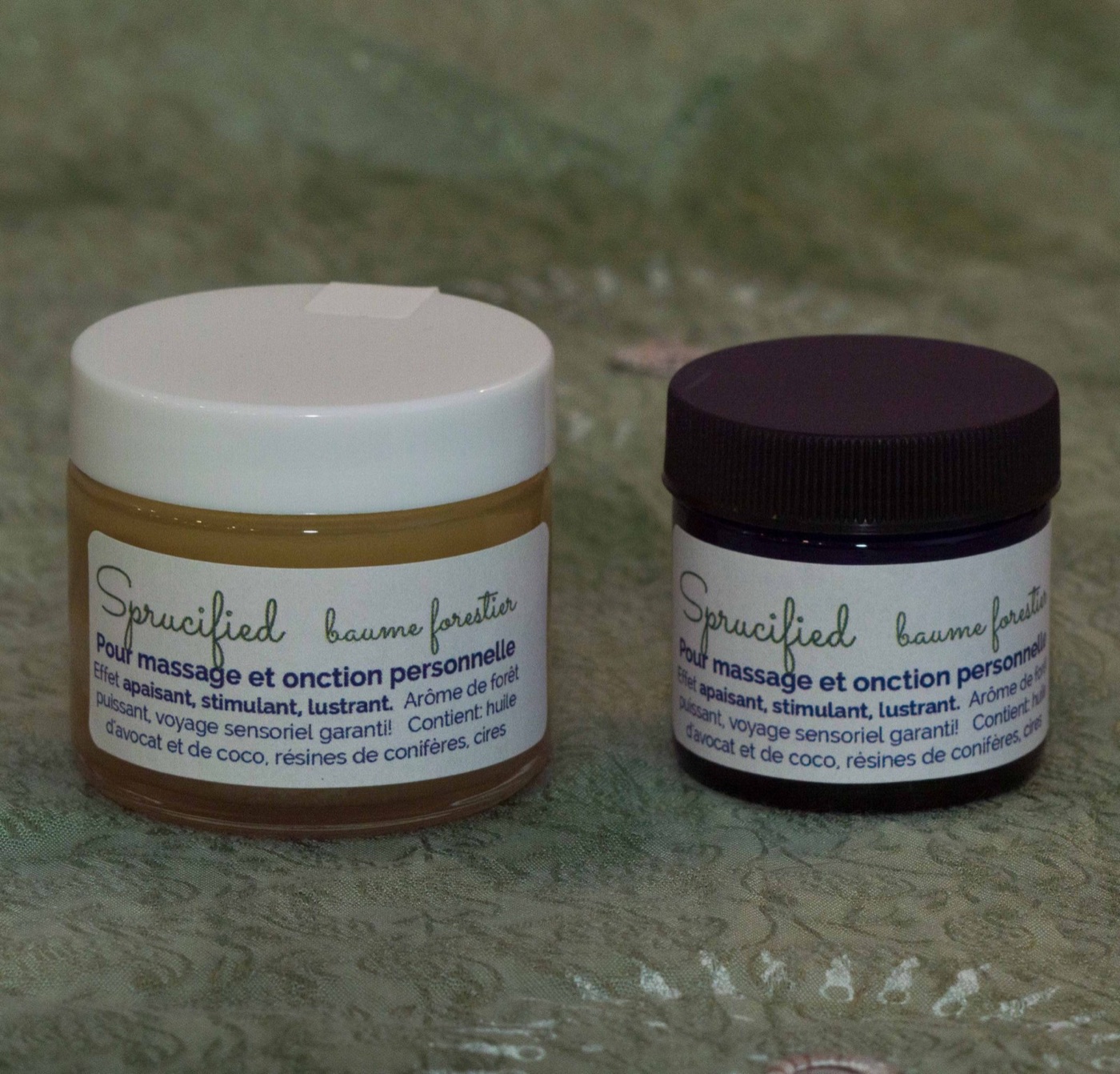
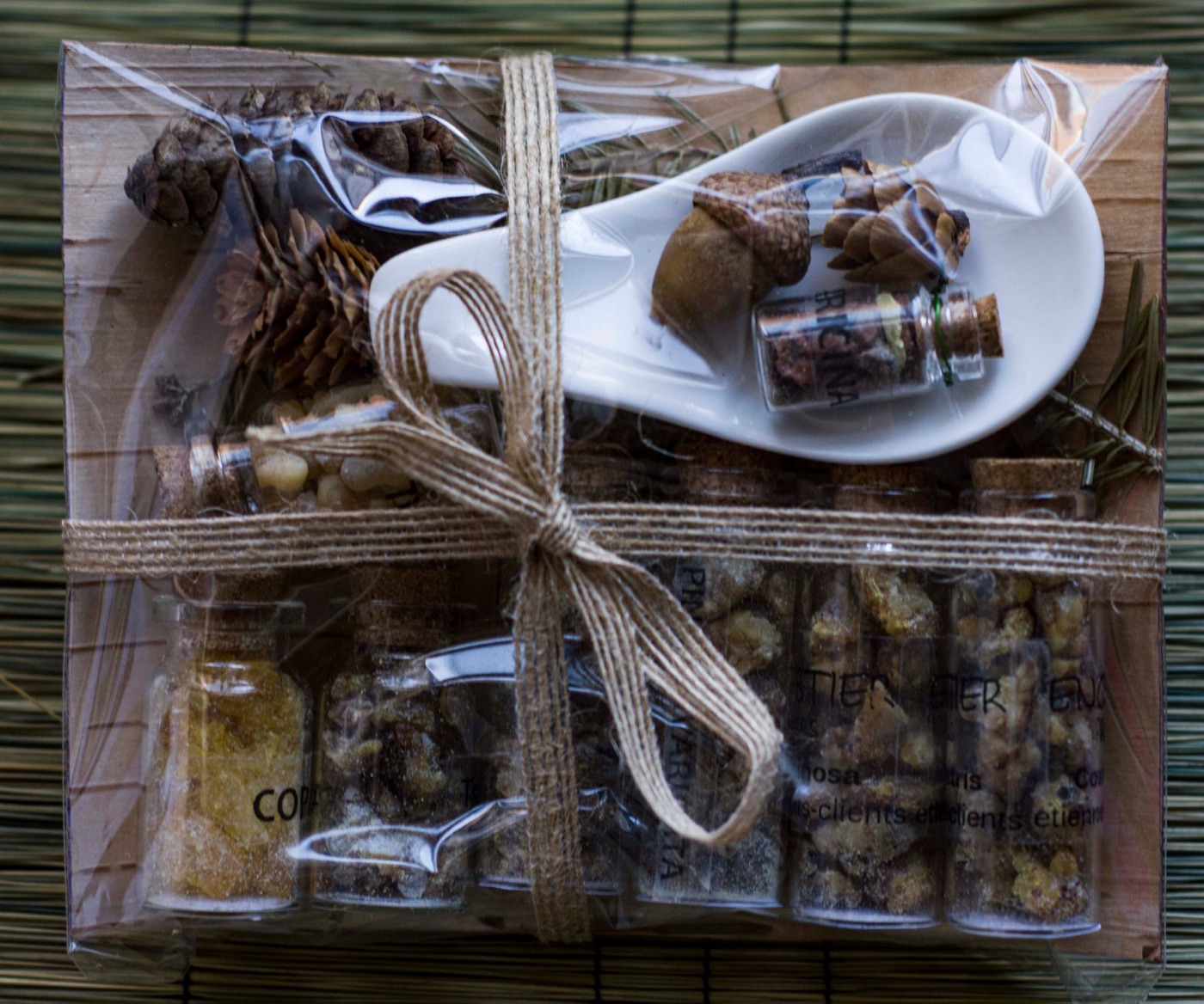
Melted into oil or burned on charcoal, it gives a northern incense scent, smoky and a touch sweet. It goes into several of the shop's balms and into the seasonal incense blends.
Our products are artisanal plant-based preparations. They are not intended to diagnose, treat, cure or prevent any disease.